
Most consumer brands believe growth depends on distribution, trade relationships, and advertising budgets. Expansion becomes the main goal. Visibility becomes the key metric. Schemes become the growth tool.
Yet revenue slows down.
The real issue is not reach. It is a weakness across the marketing cycle. When awareness is strong but consideration is weak, when conversion depends on discounts, and when repeat purchase happens by chance instead of design, growth becomes unstable.
This is not a sales problem. It is a marketing structure problem, especially in the FMCG sector, where margins are thin and customers switch quickly.
The Five-Stage Revenue Engine
Every fast-moving consumer brand operates within a clear cycle:
- Visibility
- Evaluation
- Purchase
- Product Experience
- Repeat & Advocacy
Most companies spend heavily on visibility and assume the rest will happen naturally. It rarely does. The strongest players in the FMCG market are not those spending the most money. They are the ones who manage every stage of this cycle carefully.
That is where the best marketing approach stands apart from average execution.
This is exactly the framework used by team at Shine Well Digital Solutions while working with growing FMCG brands such as Popmak and Vikalps, where the focus was not only distribution but building a full digital revenue cycle across discovery, evaluation, purchase, and repeat engagement.
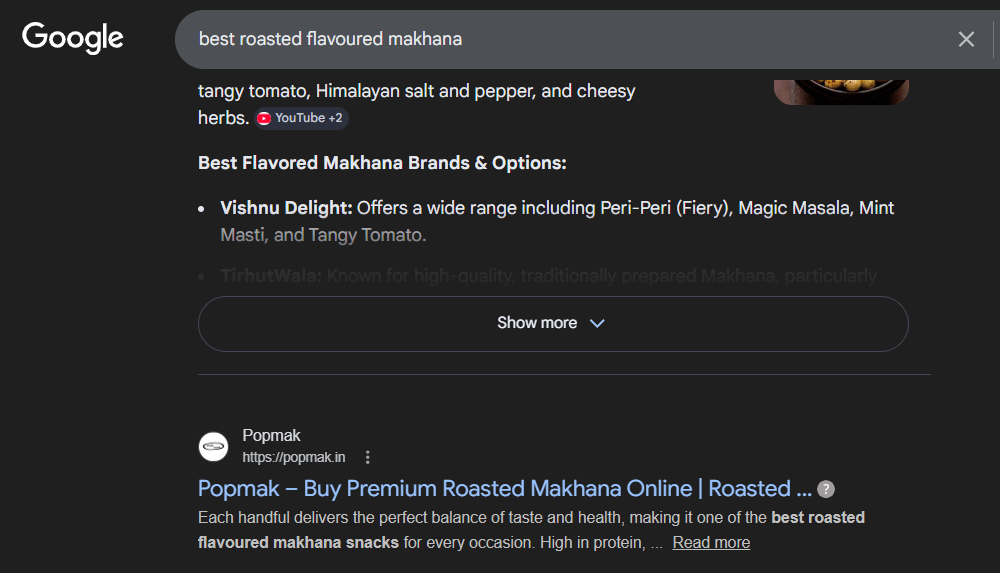
For Popmak, the strategy combined SEO authority, Amazon marketplace optimization, and structured digital visibility. As a result, the brand now consistently ranks within the top 5 search results on Google for category-driven queries such as “best roasted makhana” and “roasted makhana snacks.”
From a marketplace perspective, the Amazon dashboard shows stable monthly revenue in the lakhs, supported largely by organic discovery rather than paid traffic alone. Strong product page optimization, review management, and search visibility helped convert awareness into consistent purchase movement.
SEO indicators also strengthened significantly, including:
- Growth in non-branded keyword rankings
- Increase in organic search impressions and clicks
- Higher product discovery from category keywords
- Improved conversion rates from search traffic
This demonstrates how FMCG growth becomes more stable when visibility, evaluation, and purchase stages are managed together instead of operating in isolation.
Where the Money Actually Leaks
Ad impressions are high. Reach looks impressive. But recall does not turn into preference. If brand elements are not clear and distinct, customers remember the category, not the product. Marketing costs increase, but brand strength does not.
Revenue impact: higher acquisition costs and flat market share.
At the point of purchase, many brands look similar.
Packaging feels alike. Claims sound the same. Prices are close. Customers choose based on habit or discount.
Distribution may be wide, but sales movement remains weak.
Revenue impact: pressure to push inventory and depend on retailer support.
Conversion Driven by Discounts
Short-term schemes create temporary sales spikes. Trade offers help move stock. But if sales depend on promotions, margins reduce over time.
Customers who buy only during discounts rarely stay loyal. Revenue impact: unstable revenue and shrinking profitability.
The Illusion of Scale
Many leadership teams measure growth through:
Number of outlets added
- Volume shipped
- Campaign reach
- Trade partnerships
These are surface numbers. The real health indicators are:
- Repeat purchase rate
- Revenue driven by promotions
- Brand recall compared to preference
- Lifetime value growth
- Gap between distribution and actual sales
If repeat purchase grows slower than distribution, the problem lies in experience or retention. If ad spend increases but preference does not, awareness is inefficient.
True clarity begins when leaders look beyond volume and examine the full cycle.
The Structural Weakness of Today’s Consumer
Today’s customer is price-sensitive and constantly exposed to alternatives.
Switching is easy. Loyalty depends on value. Trial behavior is high.
This means brands must build habits, not just awareness.
In the FMCG environment, where substitution is quick and differentiation is limited, building that habit is the real advantage.
Winning brands do not depend only on visibility. They build strong brand memory, consistent quality, and ongoing engagement.
That is where advanced marketing thinking creates long-term strength.
The Strategic Reset
Sustainable growth requires balanced investment:
- Strengthen brand identity before increasing ad budgets
- Design packaging for instant recognition
- Reduce discount dependency by increasing perceived value
- Improve product feedback and quality control
- Build retention systems even for low-priced products
Execution requires alignment between branding, performance marketing, distribution, and customer engagement.
For brands like Vikalps, the focus extended beyond advertising into digital shelf dominance and long-term discoverability. Marketplace positioning, structured keyword mapping, content optimization, and reputation management allowed the brand to build stronger organic demand.
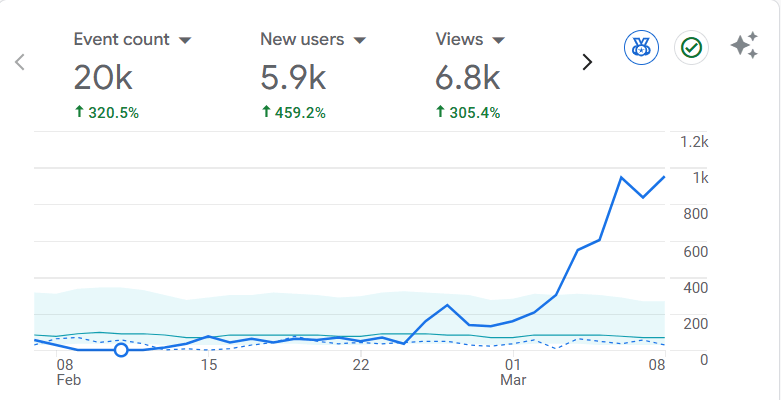
Instead of relying on continuous promotional spikes, the approach emphasized:
- Search visibility across high-intent FMCG keywords
- Optimized product pages that improve evaluation and trust
- Consistent review flow improving marketplace credibility
- Organic traffic contributing significantly to sales volume
Over time, this helped create a more balanced revenue structure where organic search and marketplace discovery drive a large share of monthly orders, reducing the need for heavy discount-driven promotions.
This kind of structured marketing system ensures that visibility converts into preference, preference converts into purchase, and purchase evolves into repeat behavior, which is the real foundation of sustainable growth in the FMCG sector.
This requires a deep understanding of the category.
That is why many brands work with specialized teams like Shine Well Digital Solutions known for building strong and practical marketing systems for high-volume consumer brands. Their focus is not just visibility, but strengthening every stage of the revenue cycle
From brand positioning to retention planning, the goal is steady margin growth, not temporary sales spikes.
When awareness is high but retention is low, growth becomes expensive. When discounts drive sales, profits decline. When product experience is weak, distribution only hides the issue for a short time.
The future belongs to brands that manage the entire journey with discipline.
The best marketing today is not louder. It is smarter, clearer, and cycle-focused.
Shine Well Digital Solutions continues to help ambitious brands move beyond surface growth and build strong, sustainable market leadership through structured marketing systems.
That is where the real scale begins.


 24×7 Technical Support
Post a Comment
You must be logged in to post a comment.